


How to Safely Prepare and Cook Cassava (Yuca): A Delicious and Nutritious Root Vegetable

Recipe Introduction:
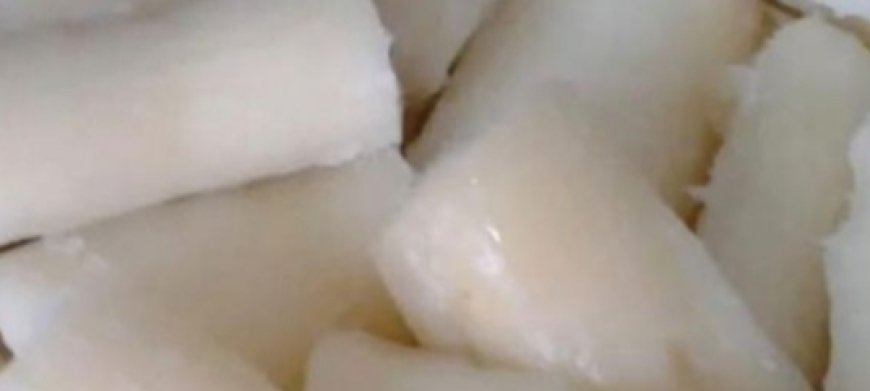
The food in the image is cassava (also known as manioc or yuca), a starchy root vegetable that is a staple in many parts of the world. While it is an essential food source, cassava contains natural cyanogenic compounds that can be toxic if not prepared properly. If consumed raw or improperly processed, it can cause poisoning. However, when prepared correctly (through boiling, soaking, and drying), cassava is safe to eat and can be enjoyed in various dishes, such as fries, stews, or even as flour.
This recipe will guide you through the correct steps to safely prepare and cook cassava.
Ingredients:
1 lb (450g) fresh cassava (peeled and cut into chunks)
4 cups of water
1/2 teaspoon salt (optional)
Lemon or vinegar (optional, for soaking)
Instructions:
1. PEEL THE CASSAVA:
Use a knife to peel the thick, brown skin of the cassava root. Be sure to remove all of the outer skin to reveal the white flesh.
Cut the cassava into chunks, about 3-4 inches long, for easier cooking.
2. SOAK THE CASSAVA (OPTIONAL BUT RECOMMENDED):
Before cooking, soak the cassava chunks in water with a little lemon or vinegar for 30 minutes. This helps reduce the cyanogenic compounds in the root, making it safer to eat.
Drain the water after soaking.
3. BOIL THE CASSAVA:
Place the cassava chunks in a large pot and cover them with water. Add salt if desired.
Bring the water to a boil over medium-high heat. Once it starts boiling, reduce the heat and simmer for 20-30 minutes, or until the cassava is soft and easily pierced with a fork.
4. CHECK FOR DONENESS:
After boiling, check the cassava by poking a fork or knife into the flesh. If it goes through easily, it’s ready. The cassava should be tender and have a smooth texture.
5. SERVE:
Drain the cassava and let it cool slightly before serving. You can serve it as a side dish with meats or vegetables, or even mash it for a creamy, starchy side dish. Enjoy with a dip or sauce of your choice!
Tips:
Safety: Always make sure to cook cassava thoroughly to remove any toxins.
Storage: You can also freeze raw or cooked cassava for later use.
Serving ideas: Cassava can be deep-fried, mashed, or used in soups and stews. You can even make gluten-free flour from dried cassava.
What's Your Reaction?